Your Website Has Two Audiences: Why the One You Can't See Will Determine If Your Business Exists in AI Search
Your website has two audiences: humans and AI crawlers. Learn how sitemaps, schema markup, and llms.txt determine whether AI recommends your business or skip...
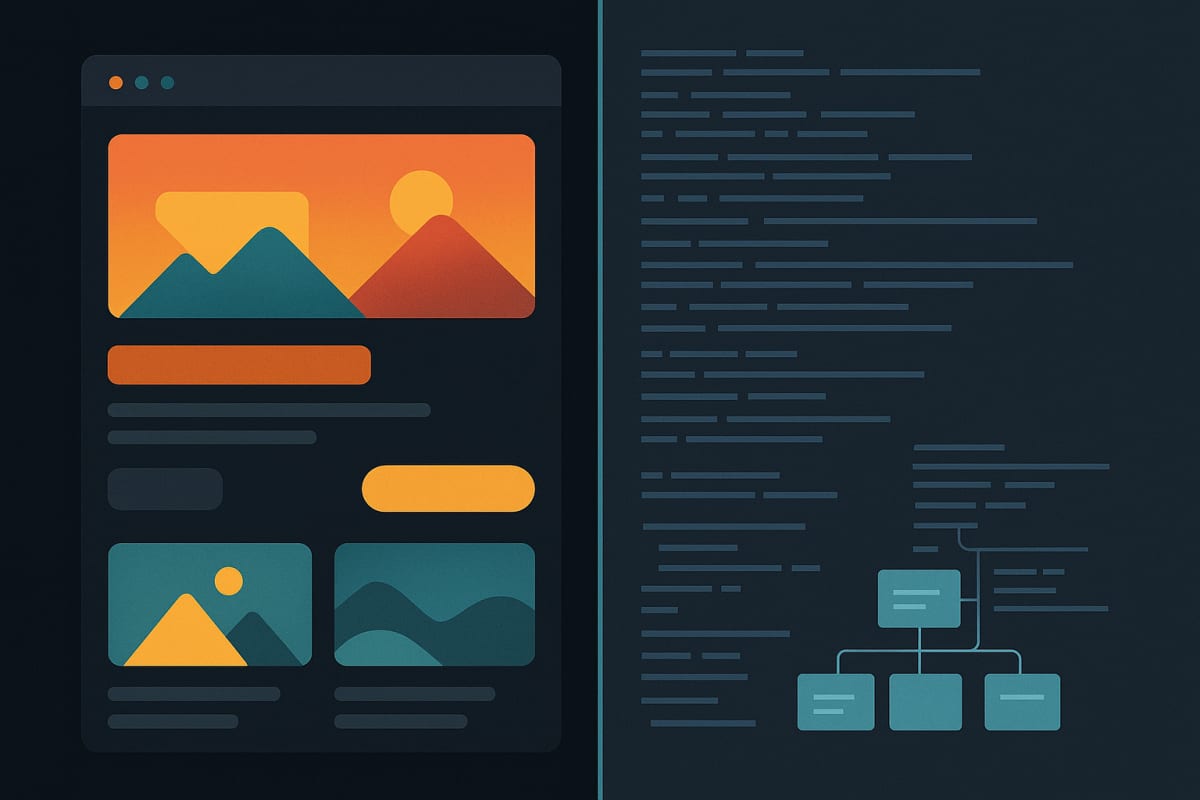
Your Website Has Two Audiences: Why the One You Can't See Will Determine If Your Business Exists in AI Search
Imagine you just opened a restaurant. You spent months picking the right lighting, designing the menu, choosing the perfect plates. Customers walk in, love the vibe, and order the filet mignon. Everything is working.
Except there's a problem. The food critic who decides whether your restaurant shows up in every recommendation guide in the city? They never walked through the front door. They went around back, looked at your health inspection records, checked your supplier list, reviewed your ingredient sourcing documentation, and left. You didn't even know they were there.
That's exactly what's happening with your website right now. You have two audiences, and you're probably only designing for one of them.
Here's what you need to know about the audience you can't see, why they matter more than the one you can, and what to do about it before your competitors figure it out first.
The Two Audiences Every Business Owner Needs to Understand
When most business owners think about their website, they think about the person sitting at a desk or scrolling on their phone. That's understandable. For 25 years, that was the only audience that mattered.
But here's the reality of 2026:
"You've got the traditional human audience which most people think of and that's the audience that wants to see the cool animations and pretty pictures... The second audience is increasingly web crawlers and AI crawlers. And I like to say that they're a bit lazy. So what we want to do is give them a shortcut."
Let's break that down.
Audience One: The Humans
Your human visitors want what they've always wanted. A clean design. Easy navigation. Clear calls to action. Form fills that don't ask 14 questions before they can request a quote. Content placed in a way that's easy to find. A website that's easy to use.
This is traditional web design, and it still matters. Nobody is saying to ignore the human experience. Your website needs to look professional, load fast, and make it obvious what the next step is.
Audience Two: The Robots
The second audience is the one that most business owners have never thought about. These are the crawlers, the bots, the AI agents that scan your website to decide whether your business should be recommended when someone asks ChatGPT, Claude, Perplexity, or Google's AI Overviews a question like "Who's the best plumber near me?" or "Which roofing company should I trust in Fort Lauderdale?"
These agents don't care about your animations. They don't admire your color palette. They can't appreciate the hero image you spent three weeks choosing. They want structured, machine-readable information that tells them exactly what your business does, where you operate, what services you offer, and why you're credible.
And here's the critical part: they're lazy. They're not going to dig through your site page by page, loading images, decoding your clever copy, and trying to piece together what you actually do. If you don't make it easy for them, they move on. To your competitor who did.
Why This Invisible Layer Is Now the Most Important Part of Your Website
Think about how people find businesses today versus even two years ago. The traditional search experience used to involve typing a query into Google, scanning ten blue links, clicking on three or four of them, comparing options across multiple tabs, and eventually making a decision. That process took 30 to 60 minutes.
Now? Someone opens ChatGPT and asks for the best AC repair company in their area. They get two or three pre-vetted recommendations in about 90 seconds. No clicking. No comparison shopping. No visiting your website at all in many cases.
The AI made the decision for them. And it made that decision based on the information it could gather about your business from the invisible technical layer underneath your website.
If that layer doesn't exist, or if it's incomplete, you're not in the conversation. Period.
We're already seeing click-through conversions on traditional ads drop as more people adopt AI tools for search. They're getting summaries at the top of Google or using ChatGPT and Claude directly. The content on your website is becoming more important than ever, but not necessarily because of direct visits. It's important because AI systems are reading it, summarizing it, and using it to decide whether to recommend your business.
The businesses that get this right now are building a compounding advantage. The ones that don't are building a compounding problem.
The Three Files That Make Your Business Visible to AI (Explained Like a Normal Person)
Here's where it gets practical. There are three specific files (or layers of code) that serve as the shortcut for these lazy robot crawlers. None of them are visible to your human visitors. All of them are critical for your AI visitors.
Let's walk through each one the way you'd explain it over a beer.
File One: The Sitemap (Your Table of Contents)
"The site map is kind of the first one that's essentially the table of contents for your website for an agent to be able to figure out which pages exist index them quickly and move on to the next business."
Think of your sitemap like the table of contents in a book. When an AI agent arrives at your website, the first thing it looks for is the sitemap. It tells the agent: here are all the pages that exist on this site. Here's what each one is about. Here's how recently each one was updated.
Without a sitemap, the agent has to wander through your website clicking links, guessing which pages exist, and hoping it finds everything. Most won't bother. They'll index what they can find quickly and move on to the next business.
With a sitemap, the agent gets the full picture in seconds. Every page. Every blog post. Every service page. Organized, labeled, and ready to be indexed.
What this means for you: If your website doesn't have a properly formatted XML sitemap, AI agents are likely missing pages on your site. That means services you offer, locations you serve, and content you've published may not exist in AI search results. Your web developer can generate one in under an hour.
File Two: Schema Markup (Your Business Card for Robots)
Schema markup is the one that sounds the most intimidating but might be the most important. Here's the simple version: it's a structured data file that hands the AI agent everything it needs to know about your business in a format it can read instantly.
Your pricing. Your license information. Your location. Your contact details. The types of services you offer. Your specializations. Your business hours. Your reviews. All of the detailed information that reinforces your credibility and helps an AI understand your business quickly goes into these schema files.
Without schema markup, an AI agent has to load each page of your website individually, take a virtual screenshot, decode your design layout, read through your copy, and try to figure out what you actually meant. That's slow, inefficient, and error-prone.
With schema markup, you're giving the agent a clean, direct path to understanding your business in the most transparent way possible. No guessing. No decoding. No errors.
Think of it this way: Imagine you're at a networking event. You could spend 20 minutes telling someone about your business in a rambling conversation, or you could hand them a perfectly organized one-page summary that covers everything they need to know. Schema markup is that one-page summary, but for AI.
What this means for you: Schema markup is where most local businesses have the biggest gap. A plumber with comprehensive schema markup (services offered, service area, license numbers, pricing ranges, customer review counts) has a massive advantage over a plumber whose website just has a phone number and a stock photo. The AI knows exactly what the first plumber does, and has to guess about the second.
File Three: llms.txt (The Velvet Rope)
This is the newest file and one that most business owners haven't heard of yet. The llms.txt file tells AI crawlers specifically which pages they're allowed to access and which ones they're not.
Why does this matter? Because your website probably has areas that shouldn't be crawled. A customer portal where clients log in to pay invoices. An internal dashboard. A staging area for content that isn't published yet. You don't want an AI agent poking around in those areas, indexing private information, or getting confused by incomplete content.
The llms.txt file is your velvet rope. It says to the AI: "Welcome. Here are the pages we want you to see. These are the ones that accurately represent our business. And these areas over here? Off limits."
What this means for you: Without an llms.txt file, AI crawlers may index pages you didn't intend to be public, or they may waste their limited crawl time on pages that don't help your business get recommended. This file gives you control over what AI sees and, just as importantly, what it doesn't.
What Happens When You Ignore the Second Audience
Let's be specific about the consequences, because this isn't theoretical anymore.
Google is already showing AI Overviews at the top of search results. More often than not, those overviews answer the user's question without them ever clicking a link. Below the AI Overview, you get paid ads. In competitive industries like insurance, real estate, or legal services, the major national brands take up those paid spots. Then below that, you get organic results on page two or three. Nobody goes there.
So if you're a local service business without strong content and proper technical infrastructure, here's what your discovery path looks like:
- AI Overviews: You're not included because your content isn't structured for AI to understand.
- Paid ads: The national brands outbid you.
- Organic results: You're buried on page two or beyond.
- ChatGPT and Claude: You're not recommended because these platforms can't easily parse your website.
The result? You don't exist in the places where customers are increasingly looking for businesses like yours.
And here's the compounding problem: every month that passes without this infrastructure in place, your competitors who do have it are building a larger and larger lead. AI systems learn patterns over time. They build preferences. The businesses that establish clear positions now are teaching AI what they're known for. Once an AI system learns that your competitor is THE option for a specific service in your area, catching up becomes exponentially harder.
Why This Is Actually Good News for Small Businesses
Here's the thing most people miss: this shift actually levels the playing field. Traditional advertising has always favored the businesses with the biggest budgets. You can't outspend Geico on Google Ads. You can't compete with a national franchise's TV budget.
But structured data, schema markup, and a proper llms.txt file? Those don't cost more based on the size of your company. A two-person plumbing operation can have better schema markup than a national chain. A solo-practice attorney can have a more comprehensive sitemap than a 200-lawyer firm.
AI doesn't care about your ad budget. It cares about clarity. It cares about structured information. It cares about being able to quickly and accurately understand what your business does, who you serve, and why you're credible.
That's an advantage that costs relatively little to build and compounds over time. You stop paying for Facebook ads, and the leads disappear the second the budget runs out. You invest in proper technical infrastructure, and it keeps working for you month after month. Someone stumbles on an FAQ on your website that answers their question in ChatGPT? That's a lead. Someone reads a blog post you published six months ago that gets surfaced in an AI overview? That's a lead. Those things happen whether you're actively paying for them or not.
What to Do Now
This doesn't require a massive overhaul of your business. It requires deliberate, sequential action. Here's how to prioritize it.
This Week
- Check if your website has a sitemap. Go to yourdomain.com/sitemap.xml. If you see a structured XML file listing your pages, you have one. If you get a 404 error, you don't. If you don't have one, this is the single most impactful thing you can do immediately.
- Ask your web developer one question: "Does our website have schema markup, and if so, what types?" If they say "what's schema markup?" that tells you everything you need to know about your current setup.
This Month
- Audit your schema markup. Google offers a free Rich Results Test tool. Plug in your homepage and a few service pages. See what structured data exists, and more importantly, what's missing. At minimum, you should have LocalBusiness schema with your name, address, phone number, service area, hours, and service types.
- Create or review your llms.txt file. Identify which pages on your website should be crawled by AI agents and which shouldn't. Customer portals, login pages, and internal tools should be excluded. Service pages, blog posts, FAQ pages, and contact information should be included.
- Review your content through the lens of AI readability. Does your website clearly answer the questions your customers ask? Are your services listed explicitly, or hidden behind clever copy and stock photos?
This Quarter
- Build out comprehensive schema markup across all service pages. Each service you offer should have its own structured data including pricing ranges, service area, credentials, and relevant certifications.
- Start publishing consistent, question-answering content. Blog posts, FAQs, and service pages that directly answer the questions people type into ChatGPT and Google. This is the content that AI systems crawl, summarize, and use to make recommendations.
- Test your AI visibility. Open ChatGPT, Claude, or Perplexity and ask the questions your customers would ask. "Who's the best [your service] in [your city]?" If you're not showing up, you now know exactly why, and you have the roadmap to fix it.
The Bottom Line
Your website has two audiences, and the one you can't see is rapidly becoming the one that matters more. The invisible technical layer (your sitemap, schema markup, and llms.txt file) is the shortcut that lazy AI crawlers need to understand, index, and recommend your business. Ignore it, and your business will increasingly not exist in the places where customers are looking. Build it right, and you create an advantage that compounds every single month.
Ready to see how AI actually views your business right now? Get a free AEO audit and find out exactly where you stand with the audience you can't see.