Your Website Has Two Audiences, and You're Probably Ignoring the One That Matters Most
Your website has two audiences: humans and AI crawlers. Learn how sitemaps, schema markup, and llms.txt determine whether AI recommends your business or skip...
Your Website Has Two Audiences, and You're Probably Ignoring the One That Matters Most
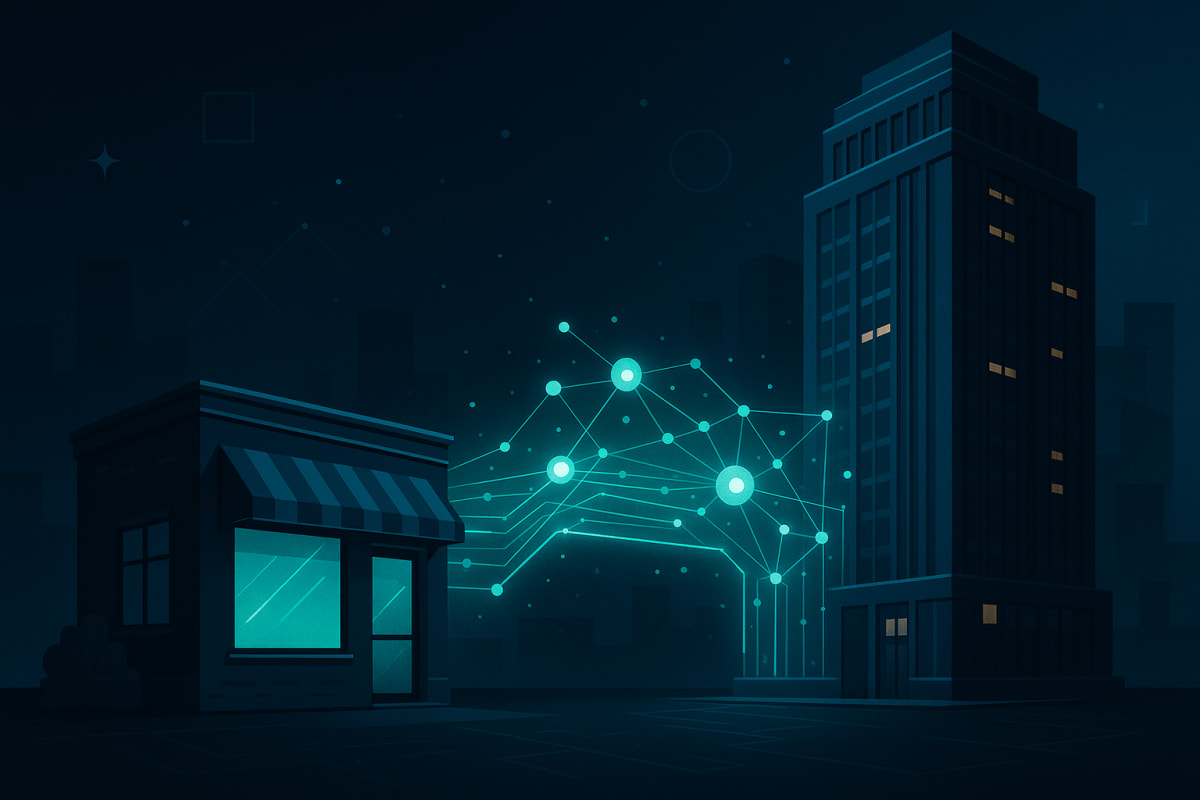
Imagine you open the best restaurant in town. The food is incredible. The ambiance is perfect. Every detail inside is dialed in. But there's no sign out front. No address listed on Google Maps. No menu posted in the window. And you forgot to tell the delivery apps you exist.
How many customers do you think walk through the door?
That is exactly what is happening to most service business websites right now. They look great to anyone who visits. The problem is that the visitors who matter most, the ones deciding whether your business gets recommended at all, can't find the front door. And those visitors aren't human.
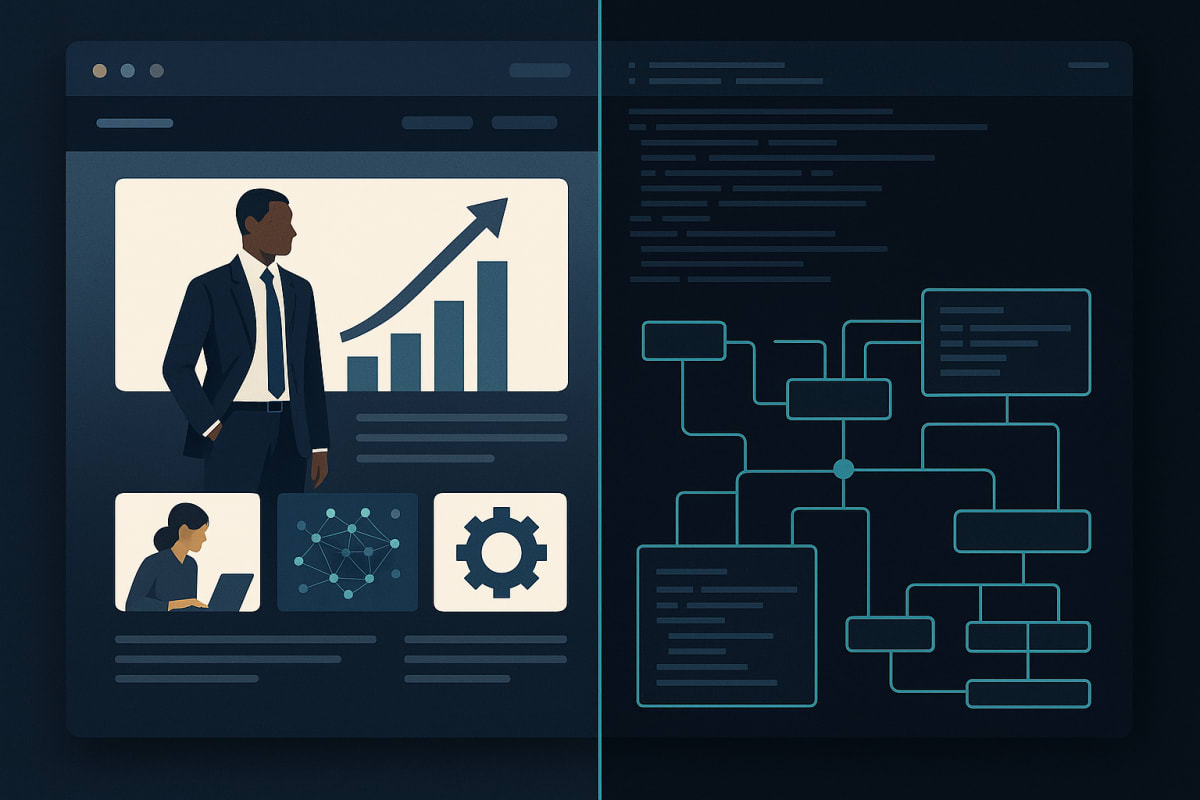
Here's what you need to know: your website serves two completely different audiences, and the one you've been ignoring is rapidly becoming the one that determines whether your phone rings in 2027.
The Two Audiences Every Website Has to Serve
You've got the traditional human audience which most people think of and that's the audience that wants to see the cool animations and pretty pictures. They want clear next steps: well-placed calls to action, simple contact forms, content that's easy to navigate. This has always been part of quality web design, and it still matters.
But here's the part most business owners miss entirely.
The second audience is increasingly web crawlers and AI crawlers. And I like to say that they're a bit lazy. So what we want to do is give them a shortcut.
Think about how people actually find businesses today. Fewer and fewer are typing queries into Google and scrolling through ten blue links. They're asking ChatGPT, "Who's the best roofer near me?" They're asking Claude, "Which HVAC company in Fort Lauderdale has the best reviews?" They're getting AI Overviews at the top of Google that answer the question before anyone clicks a single link.
Those AI systems are your second audience. And they're making decisions about your business based on what they can read, parse, and understand from your website's underlying code. Not from your hero image. Not from your slick animation. From the invisible infrastructure underneath.
Why the "Lazy Crawler" Analogy Matters
AI crawlers and web agents process millions of websites. They don't have time to load every page, take screenshots, decode your design, and try to figure out what you actually do. They need a shortcut. A clean, organized, transparent path to understanding your business.
If you give them that shortcut, they index you quickly and move on with a clear picture of who you are, what you offer, where you operate, and why you're credible. If you don't? They move on anyway. They just move on without understanding you, which means you don't get recommended.
Back to the restaurant analogy: a beautiful dining room with no exterior signage, no listing on delivery apps, and no posted menu is invisible to anyone who hasn't already been there. Your website can have the best design in your industry, but if AI agents can't quickly parse what your business does, you functionally don't exist in the channels where more and more customers are starting their buying journey.
The Three Files Your Customers Never See (But AI Agents Depend On)
So what does this "shortcut" actually look like? It comes down to three pieces of invisible infrastructure that sit behind your website. Your customers will never see them. Your competitors probably don't have them. And by 2027, they may be the single biggest factor in whether AI systems recommend your business or skip right past it.
1. The Sitemap: Your Website's Table of Contents
A sitemap is exactly what it sounds like: a structured file that tells crawlers which pages exist on your website. Think of it as the table of contents in a book. Without it, an AI agent has to wander through your site, following links, guessing at your structure, and hoping it finds everything important.
With a properly built sitemap, the agent can figure out which pages exist, index them quickly, and move on to the next business. It sounds simple because it is. But a surprising number of service business websites either don't have one, have an outdated one, or have one that's misconfigured.
The fix is straightforward, but most business owners don't even know to ask about it. If you've never had a conversation with your web developer about your sitemap, that's a red flag.
2. Schema Markup: The Business Card AI Can Actually Read
Schema markup is where things get really interesting. If the sitemap is your table of contents, schema markup is the detailed index at the back of the book. It's structured data, written in code, that tells AI agents the specific details they need to know about your business.
What goes in schema markup? Everything that reinforces your credibility and helps an agent understand your business quickly:
- Your location and service area so AI knows where you operate
- Your contact information so it can direct people to you
- Your services and specializations (types of law you practice, HVAC services you offer, real estate markets you serve)
- Your pricing information when applicable
- Your license numbers and certifications that establish trust
- Your business hours, reviews, and ratings that signal reliability
Without schema markup, the AI agent has to load each page, crawl each page, take pictures of it, decode it, and then figure out what you actually meant. That's slow, unreliable, and often inaccurate.
With schema markup, you're giving them a shortcut clean path to understanding your business in the most transparent way possible for the agent.
This is the difference between a roofing company that shows up when ChatGPT recommends "licensed roofers in Fort Lauderdale with hurricane experience" and one that doesn't appear at all, even though they've been in business for 20 years and have hundreds of five-star reviews.
3. llms.txt: The Velvet Rope for AI Crawlers
This one is newer, and most business owners have never heard of it. The llms.txt file is essentially a set of instructions specifically for AI language model crawlers. It tells them which pages they're allowed to access and which ones are off limits.
Why does this matter? Because your website probably has areas that aren't meant for public consumption. A customer portal where clients log in to pay invoices. An internal scheduling page. A staging area for content that isn't published yet. You don't want an AI agent crawling those areas, indexing that content, and using it to make recommendations.
The llms.txt file acts as a velvet rope. It guides AI crawlers to the content you want them to see (your services, your expertise, your blog posts, your credentials) and keeps them away from everything else. It's access control for the age of AI search.
Why This Is the Difference Between Existing and Not Existing
Here's the pattern worth understanding. The way people discover businesses is shifting underneath us, and the shift is accelerating.
Google now displays AI Overviews at the top of search results. More often than not, those overviews answer a question for somebody and they never click on a link. Below the AI Overview, you see paid ads. If you're in a competitive industry like insurance or real estate, the big players with massive ad budgets are going to take up those spaces. Then you're at the bottom of the page, or worse, on page two. Nobody goes to page two.
Meanwhile, a growing percentage of your potential customers are bypassing Google entirely. They're using ChatGPT, Claude, Perplexity, and other AI tools to get recommendations directly. Those tools typically recommend two or three businesses. If you're not in that group, you don't exist in that customer's decision-making process.
The businesses that get recommended are the ones whose websites are built for both audiences. The human audience sees a professional, well-designed site. The AI audience gets clean, structured data that makes it effortless to understand what the business does, where it operates, and why it's credible.
The Compounding Effect of Invisible Infrastructure
There's another dimension to this that makes the investment especially valuable. Unlike paid ads, which stop generating leads the second you stop paying, this invisible infrastructure compounds over time.
Stop paying for your Facebook ads and the leads disappear instantly. But the schema markup, the sitemap, the llms.txt file, the blog content optimized for AI crawlers; all of that stays. It continues working for you. Someone stumbles on an FAQ that answers their question in ChatGPT six months from now? That's a lead generated by infrastructure you already built.
This is why we talk about organic content and structured data as infrastructure, not a campaign. Campaigns have end dates. Infrastructure compounds.
The Real-World Impact: What We're Seeing in 2026
Let's talk about what's happening right now in the market, particularly for local service businesses.
Ad performance across traditional platforms is declining. Click-through conversions on Google Ads are dropping as people adopt AI tools and get their answers from summaries rather than clicking links. You may be paying the same cost per click, or more, for fewer actual conversions.
At the same time, content on your website is becoming more important, not less. Even if fewer people visit your site directly, AI crawlers are reading your content constantly. They're pulling information from your blog posts, your service pages, your FAQs, and your schema markup to form opinions about your business. Those opinions determine whether you get recommended.
The businesses that have invested in crawlable, structured, AI-readable content are showing up in ChatGPT recommendations, Claude responses, and Google AI Overviews. The ones that haven't? They're invisible in exactly the channels where customer behavior is migrating.
A Practical Example
Consider two HVAC companies in the same market. Both have been in business for 15 years. Both have great reviews. Both do quality work.
Company A has a beautiful website with high-end photography, smooth animations, and a modern design. But no schema markup, no llms.txt file, and a sitemap that hasn't been updated in two years. Their blog has three posts from 2023.
Company B has a clean, professional website (not flashy, but well-organized) with comprehensive schema markup listing every service they offer, their service area, their certifications, and their contact information. They have a current sitemap, a properly configured llms.txt file, and they publish one blog post per week answering common customer questions.
When someone asks ChatGPT, "Who's a reliable AC repair company near me?" Company B gets recommended. Company A doesn't. Not because Company A is worse at HVAC repair. Because the AI agent had a shortcut to understanding Company B and had to guess about Company A.
Multiply that scenario across hundreds or thousands of searches per month, and you start to see why this infrastructure is not optional.
What To Do Now
You don't have to overhaul everything overnight. But you do need to start. Here's a practical timeline.
This Week
- Check if your website has a sitemap. Go to yourdomain.com/sitemap.xml. If you get a 404 error or the file looks outdated, flag it immediately with your web developer.
- Ask your developer about schema markup. Specifically, ask: "Does our website have structured data for our business type, services, location, and contact information?" If the answer is no, or if they don't know what you're talking about, that tells you something.
- Google your own business using ChatGPT. Ask it questions a customer would ask. "Who's the best [your service] in [your city]?" See if you appear. If you don't, now you know the problem is real.
This Month
- Implement or update your schema markup. At minimum, include your business name, address, phone number, service types, service area, business hours, and any licensing or certification information. Use Schema.org standards.
- Create or update your llms.txt file. Make sure AI crawlers can access your public-facing pages (services, blog, about, contact) and are blocked from private areas (customer portals, internal tools, staging pages).
- Audit your existing content. Is it answering the questions customers actually ask? Does it provide specific, detailed information about your services? Thin content is invisible content.
This Quarter
- Start publishing weekly content. Blog posts, FAQs, service area pages; anything that gives AI crawlers more structured information to index. Consistency matters more than perfection.
- Review your ad spend allocation. If you're spending $2,000 or more per month on Google Ads, consider redirecting a portion toward organic content development and technical SEO. Paid ads are gasoline on a fire, but you need the fire first.
- Explore newer ad platforms. ChatGPT's ad platform is still relatively new, which means lower cost per click and less competition. It's worth running an experiment with a small budget to test performance.
- Request an AI visibility audit. Find out exactly how AI systems currently perceive your business, what they know, what they're missing, and what they're getting wrong.
The Bottom Line
Your website has two audiences, and the one most businesses ignore (AI crawlers and web agents) is rapidly becoming the primary gatekeeper for customer discovery. The invisible infrastructure underneath your website, sitemaps, schema markup, and llms.txt, is the difference between being recommended and being invisible. The businesses that build this infrastructure now are creating a compounding advantage their competitors can't easily replicate.
Want to see exactly how AI search engines view your business today? Get a free AEO audit from GTM37 and find out whether you're showing up where your customers are looking, or whether your best restaurant has no sign out front.