Social Media Part 2: It's Called 'TikTokification', But This Isn't About TikTok
A car dealership with 15 followers posts a video. It gets 2 million views. Meanwhile, an account with 100,000 followers posts 'Happy Monday!' It gets 200 views. What changed?
A car dealership with 15 followers posts a video about buying a used truck. It gets 2 million views. Meanwhile, an account with 100,000 followers posts a generic "Happy Monday!" graphic. It gets 200 views.
What changed?
The answer explains why everything you thought you knew about social media is now obsolete. And why 2026 might be the best year small businesses have ever had to compete with the big guys.
Quick Recap: Where We Left Off
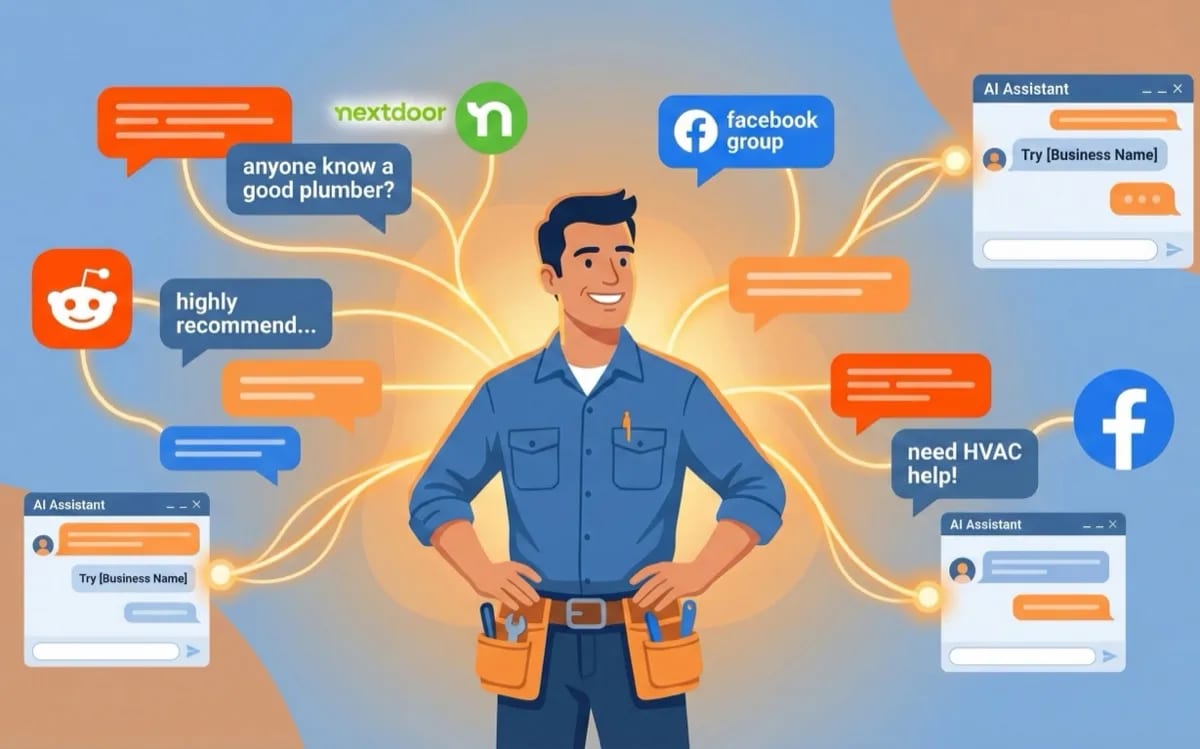
Last week, I made the case that social media isn't optional anymore. Not because you'll get leads directly from your posts (you probably won't track them), but because the conversations happening on social platforms are feeding the AI systems that recommend businesses like yours.
We covered the "dark funnel," social listening, and how to engage in communities without being the guy at the networking event who hands out business cards before saying hello.
This week, we need to go deeper. Because understanding why social media matters is only half the equation. The other half is understanding how the platforms actually decide who sees your content. And how that's fundamentally changed.
Two Networks: Social Graph vs. Interest Graph
Here's the framework that explains everything happening in social media right now.
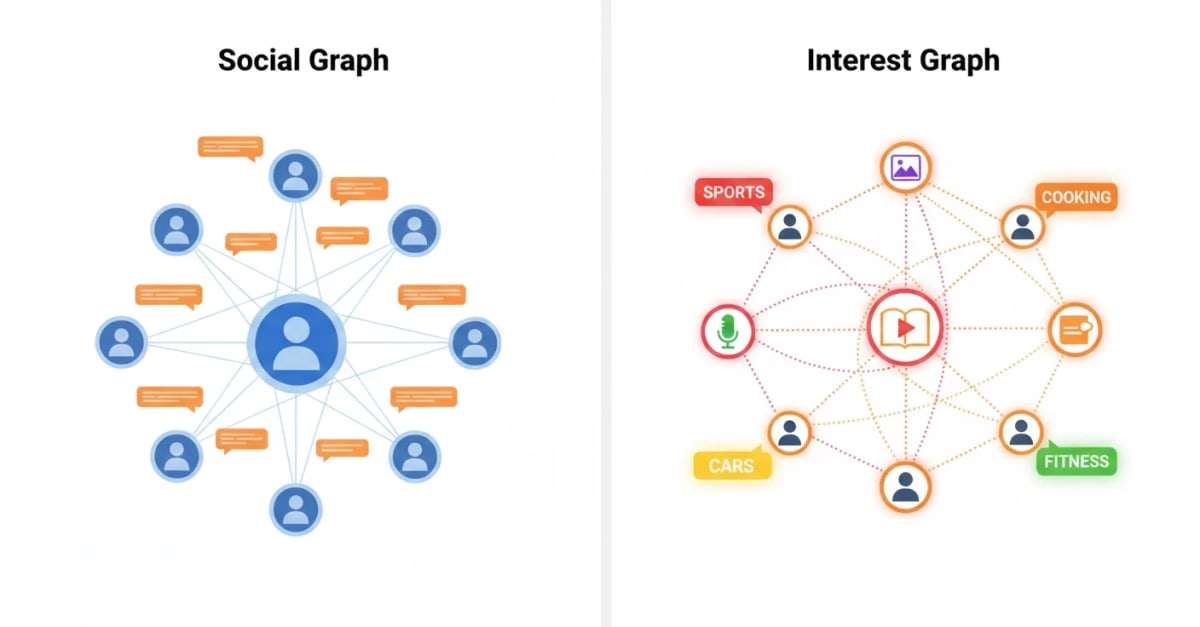
The Social Graph is based on who you know. Classic Facebook, early Instagram, LinkedIn connections. The platform shows you content from people you've chosen to follow. You build an audience first, then you market to that audience.
The Interest Graph is based on what you care about. TikTok's For You Page, YouTube recommendations, Instagram Reels. The platform shows you content based on your behavior: what you watch, what you like, how long you dwell on something. Regardless of who posted it.
For the past 15 years, social media ran on the social graph. You had to earn followers before you could reach anyone. Big brands with big budgets dominated because they could afford to build massive audiences.
That's over.
Every major platform is now shifting from social graph to interest graph. Gary Vaynerchuk calls it "The TikTokification of Social Media." TikTok was the first to prove that surfacing content based on interests (not connections) keeps users engaged longer. Now everyone's copying them.
Facebook. Instagram. LinkedIn. YouTube. They've all rebuilt their algorithms around the same principle: show people what they want to watch, not just what their friends posted.
Translation: The platforms no longer care how many followers you have. They care whether your content is relevant to someone's interests.
What This Actually Means for Your Business
Let me make this concrete.
The Old World (Social Graph):
- Build followers first, then market to them
- Follower count = reach potential
- You had to "earn" an audience before you could speak to them
- Big brands with big advertising budgets won
The New World (Interest Graph):
- Content quality determines reach. Every single post.
- A 50-follower account can outperform a 50,000-follower account
- You don't need permission (followers) to reach people
- Every post is a fresh audition
Here's the example that makes this real: A car dealership with 15 followers posts a video that's genuinely useful to people shopping for cars. The algorithm recognizes the content is relevant to that interest cluster and distributes it. Millions of views. Meanwhile, established accounts posting content nobody wants to watch get nothing.
The math is simple but brutal: Your competitors' follower counts don't matter anymore. Your content quality is the only variable that counts.
One of the Biggest Opportunities Small Businesses Have Ever Had
Here's what most people miss about this shift.
For the first time in the history of modern marketing, the platform's incentives are aligned with yours. Let that sink in… For the first time in the history of modern marketing…the multi-billion dollar platform's incentives, align with small business.
Think about it. Instagram doesn't want to lose you to TikTok. YouTube doesn't want to lose you to Netflix. They're competing for your attention against every other app on your phone. Which means they're incentivized to show users the most relevant content, regardless of who made it.
If you create something people actually want to watch, the platform will distribute it. They'll reward relevance with reach. There's no cap. Make better content, get more distribution.
Contrast that with the old model: You buy a billboard. You pay for the placement regardless of whether your ad is good or terrible. You run a TV commercial. The network takes your money whether people watch or skip. You buy Google Ads. You pay per click whether your landing page converts or not.
Social platforms in 2026 work differently. They reward quality with reach. For free.
This puts small businesses on equal footing with national brands. A local HVAC contractor can compete with a company spending millions on advertising. Not by outspending them. By out-relevanting them.
Why Most Businesses Will Miss This
Because they're still operating on 2020 assumptions:
- "I need more followers first"
- "Social media doesn't work for my industry"
- "I'll just post something once a week to stay active"
- "Happy Friday from the team!" with a stock photo
These businesses are measuring success by follower count instead of content performance. They're treating social media as a checkbox instead of a content engine.
And they're leaving the opportunity on the table for competitors who understand what's changed.
What Kind of Content Actually Wins?
Interest graph algorithms evaluate a few key signals:
- Watch time / dwell time: How long do people stay on your content?
- Completion rate: Do they watch to the end or swipe away?
- Engagement: Likes, comments, shares, saves
- Cluster matching: How do similar users engage with similar content?
That tells you exactly what to create.
Content that performs:
- Answers real questions (from your social listening... remember last week?)
- Specific and niche (algorithms can match you to the right interest cluster)
- Hooks in the first 3 seconds (that's when users decide if it's relevant)
- Formatted for the platform (vertical video, native features)
Content that dies:
- Generic promotional posts ("We offer quality service!")
- Stock photos with captions
- Content that requires context from following you
- Memes unrelated to your expertise
Let me tell you about Maria. She runs a landscaping company in Tampa. For months, she posted generic content: photos of completed jobs, "Spring is here!" updates. Views from her 340 followers: 40-50 per post.
Then she made a 60-second video explaining why her neighbor's lawn died. Brown patch fungus. Here's what to look for. Here's how to prevent it.
That post got 15,000 views. She received 12 DMs asking for quotes. Same account. Same follower count. Different content strategy.
The algorithm didn't care that she only had 340 followers. It recognized the content was relevant to people interested in lawn care and distributed it accordingly.
Same You, Different Rooms
Here's where it gets nuanced. The interest graph shift is happening everywhere, but each platform is still a different environment.
Think about how you show up at a networking event versus a backyard BBQ versus a client meeting. You're still you, but the context shapes how you communicate.
Same principle applies to social platforms. You don't need to be everywhere. But you do need to understand that "post the same thing everywhere" doesn't work.
Here's what service businesses need to know:
Facebook: The Local Goldmine
Three billion monthly active users (there's 8.2 billion people on the planet). The most underestimated platform by people who think they're too cool for it.
When people scroll Facebook, they're often in a "hometown" mindset: checking on old friends, local groups, community updates. That makes them receptive to local businesses. Facebook Groups remain massively underutilized (see last week on engagement strategy). And organic reach is back via Reels.
For most local service businesses, Facebook should be a priority platform, not an afterthought.
LinkedIn: The Professional Services Powerhouse
If you serve B2B clients, professional services, or executives, this is your platform. Users are in "business and career" mode. They expect to read, learn, and consume information.
Personal profiles get more distribution than company pages. Build your personal brand, not just your business page. Copy matters more here than on visual-first platforms.
For financial advisors, consultants, IT providers, or any B2B service: LinkedIn is where your buyers already spend their time.
YouTube: The Search Engine You're Ignoring
The second largest search engine in the world. When people search "how to choose a roofer" or "HVAC maintenance tips," YouTube results show up in Google.
Higher production expectations, but the content has a longer shelf life. Great for establishing expertise that generates leads months or years later.
TikTok: The Training Ground
Even if your customers aren't on TikTok (more are than you think), learning to create content here teaches you skills that transfer everywhere. Like it or not, video is vastly outperforming text only / Canva templated posts. Think about it…what makes you stop scrolling? The first 3 seconds determine everything. You'll learn to hook attention fast.
Interest-based communities exist for almost everything. #HVACTok. #PlumbingTok. Yes, really.
Instagram: The Catch-All
Think of it as a one-stop shop for content consumption. Different formats reach different audiences: Reels reach non-followers, Stories engage existing followers, your profile serves as your modern homepage.
The point: Pick 2-3 platforms where your customers actually are. Show up in a way that fits each room. Don't spread yourself thin trying to be everywhere.
Marketing for the Sake of Better Marketing
Here's something Fortune 500 companies spend millions to learn: what resonates with their market.
Focus groups. Test campaigns. Consumer research. Massive budgets to figure out what messages land.
You get that data for free. Every post you make on an interest-graph platform is market research. The algorithm tells you exactly what worked and what didn't.
Post 10 different angles on a topic. Watch which one performs. That winner becomes a blog post, an email subject line, a paid ad. You've validated it with real engagement before spending a dollar.
Businesses that understand this use social content as a testing ground. They learn what questions their market cares about, what language resonates, what formats get attention. Then they scale the winners.
Your Action Plan
Mindset Shifts:
- Stop counting followers. Start measuring content performance per post.
- Every piece of content stands alone. Ask: "Would this be interesting to someone who's never heard of me?"
- You're not building an audience. You're creating content that the algorithm matches to the right audience.
This Week:
- Review your last 10 posts. How many would be relevant to someone who doesn't follow you?
- Identify 3 questions from your social listening and create content that answers them. No pitch, just value.
- Post and watch the data. Which performed best? Why?
This Month:
- Pick 2-3 platforms based on where your customers actually are
- Create a content calendar built around questions and topics, not promotions
- Treat each post as a standalone piece that earns its reach
The AI Connection
Here's why this all ties back to the bigger picture we've been building.
The same principle that drives interest-graph algorithms drives AI recommendations. ChatGPT doesn't care how many followers you have. It cares whether you're mentioned, recommended, and associated with expertise in your category.
Interest graph thinking applies to AI visibility too: Be relevant to topics, not just visible to connections.
The businesses consistently creating helpful, specific content are training both social algorithms and AI systems to recognize them as authorities. This is the unified strategy: Create content so relevant that platforms, both social and AI, can't help but surface it.
The Bottom Line
The TikTokification of social media might be the best thing that's ever happened to small businesses.
For the first time, you don't need a massive following, a big budget, or a famous name to reach exactly the right customers. You just need to create content worth watching.
Your 15-follower account can outperform your competitor's 15,000-follower account. Every single week. Starting this week.
The only question is whether you'll create content that earns the algorithm's distribution, or keep posting like it's 2015.
Ready to Build a Content Strategy That Actually Works?
Understanding the interest graph is one thing. Executing a platform-specific content strategy that drives business is another.
At GTM37, we help service businesses build content systems that work with the algorithms, not against them. Whether that's creating the content, training your team, or managing it entirely, we've translated these Fortune 500 playbooks for businesses like yours.
Get Your Free Digital Presence Audit: We'll show you exactly how you're showing up across platforms and what opportunities you're missing.
Subscribe to the Booked Solid newsletter for weekly marketing insights designed for service businesses.