How OpenAI Plans to Monetize 800 Million Users and What It Means for Your Business
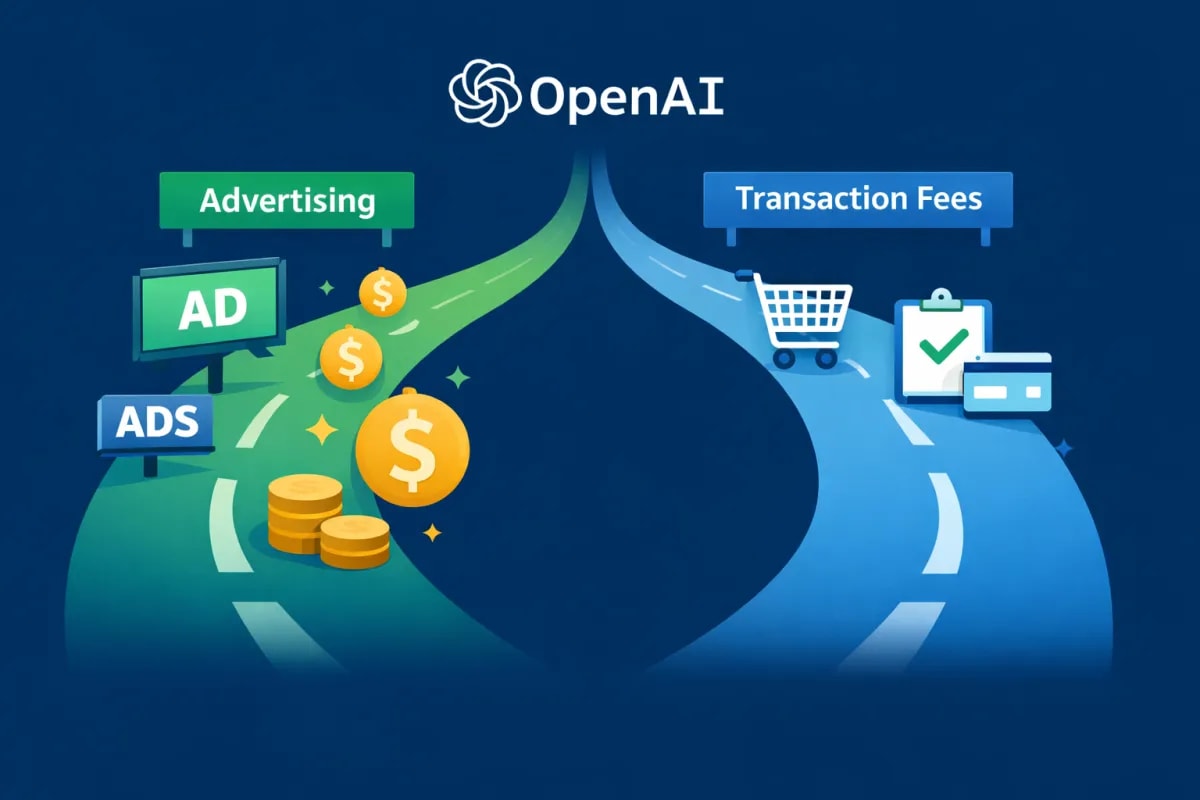
OpenAI is building two monetization paths: advertising, where businesses pay to be seen inside conversations, and transaction fees, where OpenAI takes a percentage when customers buy through ChatGPT. Both create new discovery channels for local service businesses. Neither works quite like Google.
One question I keep getting is: "When can I start advertising on ChatGPT?"
Financial news outlets have been asking a related question: "How is ChatGPT going to make money?"
It's not idle curiosity. The answer shapes how businesses will be discovered inside the platform that 800 million people use every week. And on January 16th, OpenAI announced their answer: advertising is coming to ChatGPT.
But that's only half the story.
OpenAI is building two monetization paths. Advertising, where businesses pay to be seen inside conversations. And transaction fees, where OpenAI takes a percentage when customers buy through ChatGPT. Both create new discovery channels for local service businesses. Neither works quite like Google.
Last week I wrote about Google and Apple betting on a future where AI completes purchases without customers visiting websites. OpenAI is making the same bet. But now they've shown us exactly how they plan to let businesses reach those users.
Here's what you need to know.
The Two Paths To Reach 760 Million Users
OpenAI has 800 million weekly active users. But not all of them will see advertising.
OpenAI recently restructured their subscription tiers. The new lineup:
- Free - No cost, includes ads
- Go - $8 per month, a new tier announced in January 2026 with faster responses and higher limits, includes ads
- Plus - $20 per month, no ads
- Pro - $200 per month, no ads
- Business and Enterprise - Custom pricing, no ads
Only Free and Go tier users will see advertising. That's roughly 760 million people, since only about 5% of ChatGPT's user base pays for the ad-free tiers.
Path one is advertising. Businesses pay to appear inside ChatGPT conversations. But only conversations with Free and Go tier users. Testing begins "in the coming weeks" with large enterprise advertisers.
Path two is transaction fees. Businesses pay a percentage when customers complete purchases through ChatGPT's Instant Checkout feature. This works across all tiers, including paid subscribers. It's already live with select partners. If you run an e-commerce business on Shopify, pay close attention to the Instant Checkout section below.
Both create opportunities for local service businesses to be discovered. But they work differently than anything you've used before. Let me break down each one.
ChatGPT Advertising: What We Know
Who Sees Ads
Not everyone. Only users on the Free tier and the new Go tier at $8 per month will see advertising. That's roughly 760 million people.
Users paying for Plus at $20 per month, Pro at $200 per month, or business and enterprise accounts remain ad-free. OpenAI is protecting the premium experience while monetizing the mass market.
The question for your business: Are your target customers likely to be free ChatGPT users or paid subscribers? A homeowner searching for a plumber is probably on the free tier. A corporate procurement manager might be on an enterprise account.
Where Ads Appear
This is the key difference from Google.
Google shows ads above organic results. You see the ads first, then the answer.
ChatGPT shows ads at the bottom of the AI's response. You get the answer first, then see relevant sponsored content below.
OpenAI's announcement is explicit: "Ads do not influence the answers ChatGPT gives you." The ad is positioned as additive discovery. Here's something relevant you might also want. Not pay-to-rank manipulation.
In Google's model, the best ad placement competes with organic results for attention. In ChatGPT's model, the organic answer comes first. The ad supplements it. The psychological positioning is different: the ad arrives after the user already has what they asked for.
Sam Altman has been critical of Google's advertising alignment. As he put it: "Ads on a Google search are dependent on Google doing badly. If it was giving you the best answer, there'd be no reason ever to buy an ad above it."
ChatGPT is trying a different approach. Whether it holds as revenue pressure mounts remains to be seen.
The Guardrails
OpenAI built in restrictions that don't exist on Google:
Adults only. No ads served to users under 18. ChatGPT determines this through AI analysis of conversation patterns.
Category exclusions. No sponsored content adjacent to health, mental health, or political discussions.
User controls. Users can disable ad personalization, clear ad data, and dismiss individual ads.
If your services relate to health, mental health, or anything politically adjacent, these guardrails may limit when your ads can appear. A therapist or counselor, for example, might find their ads excluded from the exact conversations where they'd be most relevant.
How Targeting Works
Google Ads uses keyword bidding. You bid on "emergency plumber Atlanta." Higher bid means higher placement. It's a more direct pay-to-play model.
ChatGPT Ads use conversation context. If someone is discussing home repairs, home service ads may appear. If someone is planning travel, travel ads may appear. No keyword auction.
What we don't know yet: OpenAI hasn't disclosed whether advertisers will be able to target specific conversation topics, geographic areas, or user demographics. The contextual model is clear. The targeting controls are not.
Pricing: What We Don't Know
This is important to state explicitly. OpenAI has not announced pricing. No CPM. No CPC. No CPA. Nothing.
For context: Perplexity AI was charging premium rates of $50 or more per thousand impressions before pausing their ad program in October 2025. Microsoft Copilot ads typically run 30% to 70% cheaper than Google. ChatGPT's pricing could fall anywhere in that range.
We also don't know minimum budgets, whether there will be auction-based bidding, or how ad inventory will be allocated.
The honest answer when clients ask about cost: We don't know yet. OpenAI is starting with large enterprise advertisers. Pricing for small businesses likely won't be disclosed until self-serve access opens, probably late 2026.
Timeline
OpenAI is following the same rollout pattern as Google, Meta, and Microsoft. Large advertisers first, then gradual opening to smaller businesses as the platform matures.
Right now, only enterprise advertisers have access. Testing begins in the coming weeks with major brands. Self-serve access for small businesses will likely arrive late 2026 at the earliest.
That gives you time to prepare.
ChatGPT Apps: What's Changed Since October
If You Run an E-Commerce Business, Pay Attention Here
Unlike advertising, which won't be available to small businesses until late 2026, Instant Checkout is live right now for e-commerce merchants.
If you sell on Shopify, you're already eligible. Over one million Shopify merchants can enable Instant Checkout today. That means customers can discover your products, compare options, and complete purchases inside ChatGPT without ever visiting your website.
This is the transaction-fee model in action. OpenAI takes a small percentage of completed sales. You handle fulfillment and customer support. The customer gets a frictionless buying experience.
For e-commerce businesses, this isn't a "watch and wait" situation. This is a "turn it on and test it" situation. The advertising rollout matters for service businesses who can't transact digitally. But if you sell products online, the commerce infrastructure already exists.
In October, I wrote about how the ChatGPT App Store would change customer discovery. That article covered the launch partners, the Atlas browser, and why machine-readable websites matter for AI visibility.
Here's what's changed since then.
App Submissions Are Now Open to Everyone
On December 17th, OpenAI opened app submissions to all developers. You no longer need to be Zillow or Expedia. Any business can build and submit an app for review.
The App Directory launched at chatgpt.com/apps with Featured, Lifestyle, and Productivity categories. First approved third-party apps started rolling out in early January 2026.
Instant Checkout Is Live
This is the transaction-fee monetization model. When users ask shopping questions, ChatGPT can show products with "Buy" buttons. The entire purchase happens inside the conversation. Discovery, selection, payment, confirmation. No website visit required.
Who's live right now: Etsy sellers, over one million Shopify merchants including brands like Glossier and SKIMS, and a PayPal partnership that brings tens of millions more merchants.
How OpenAI makes money: They take a small percentage of each transaction. The exact fee isn't public, but it's refunded on returns. Merchants remain the merchant of record. They handle fulfillment and customer support.
OpenAI has stated they prefer this model over advertising. The transaction-fee model aligns their incentives with giving good recommendations. They only make money when users actually buy. Which means they want to recommend businesses users will actually choose.
What Hasn't Changed
The core opportunity I described in October remains the same. ChatGPT surfaces apps contextually based on what you're discussing. You don't search an app store. You say "I need a plumber" and the plumber's booking widget can appear in the conversation.
For the full breakdown of how apps work, how the Atlas browser evaluates your website, and the technical foundations that make you discoverable, read The New Buying Journey.
How Both Channels Serve Content Contextually
Here's where advertising and apps connect. And where Answer Engine Optimization becomes the foundation for both.
Contextual Surfacing Instead of Keyword Matching
Google's model: You bid on keywords. Your ad appears when someone searches those exact terms.
ChatGPT's model for both ads and apps: Content surfaces based on conversation context. The AI interprets what the user is trying to accomplish and presents relevant options.
This is a fundamental shift. You're not targeting "emergency plumber Atlanta." You're being surfaced when someone is having a conversation about a plumbing emergency in Atlanta. Regardless of the exact words they use.
The Same Foundation Powers Both
For ChatGPT to surface your ad or your app at the right moment, it needs to understand what services you offer, where you operate, why you're qualified, and what problems you solve.
Sound familiar? That's the same AEO foundation we discuss in every issue of this newsletter: structured data, content authority, and consistent visibility signals.
The businesses with clear, machine-readable information about what they do become easier for ChatGPT to match with relevant conversations. Whether that's for organic recommendations, contextual ads, or app suggestions.
An Open Question Worth Considering
Here's something we don't have data on yet. But the logic is compelling.
If your blog content already gets cited by ChatGPT when answering customer questions, will your ads perform better when they appear in those same contexts?
Think about it. ChatGPT already knows your content is authoritative enough to reference. When your ad then appears below that same type of answer, does the user trust it more? Is there a halo effect where organic authority reinforces paid visibility?
OpenAI hasn't disclosed anything about how organic presence affects ad performance. But the question suggests that businesses ChatGPT already trusts as information sources may have an advantage when they also advertise.
Another reason to build your AEO foundation now, before advertising opens to small businesses. The investment in being discoverable organically may compound when paid channels become available.
Thinking About Your Business
You don't need to build an app tomorrow. But you should start thinking about your business in a way that prepares you for this future.
Two Questions to Ask Yourself
Question one: What questions do customers ask before they hire you?
Not "how much does it cost." That comes later. What's the question that starts the conversation?
A real estate agent hears "What's my home worth?" An HVAC contractor hears "Why is my AC making that noise?" A personal injury attorney hears "Do I have a case?" An accountant hears "How much will I owe in taxes this year?"
These questions are the entry points. They're what customers ask ChatGPT before they even know they need to hire someone.
Question two: What tasks do you perform repeatedly that start with one of those questions?
The real estate agent's flow: Question leads to home valuation leads to consultation booking. The HVAC contractor's flow: Question leads to problem diagnosis leads to service scheduling. The attorney's flow: Question leads to case evaluation leads to intake form.
This is the flow that could become an app. Not because you need to build it today, but because understanding this flow helps you create content that addresses each step. Content that ChatGPT can cite. Content that positions you as the answer. Content that eventually could power an interactive experience. Then determine if building an app makes sense.
The Content Connection
Every question customers ask is a blog post. Every step in that flow is content that establishes your authority.
The real estate agent who has comprehensive content about home valuations in their market becomes the agent ChatGPT cites when someone asks "What's my home worth in Fort Lauderdale?"
That same content becomes the foundation for an app that actually delivers valuations. And when ChatGPT advertising opens, that agent's ads appear in contexts where ChatGPT already recognizes their expertise.
The content you create today serves organic discovery now, informs your app strategy later, and may amplify your advertising effectiveness when that channel opens.
What To Do Now
This Week
Ask ChatGPT how it would answer your customers' questions. Open ChatGPT and ask the exact questions from the section above. See what it recommends. Note whether your business appears, and if it does, what information it cites.
Check your Google Business Profile completeness. This remains the highest-ROI foundation for local businesses. AI systems pull from this structured data. Complete every field.
This Month
Document the questions-to-tasks flow for your business. Write down the three to five most common questions customers ask before hiring you. Map what happens after each question. This becomes your content roadmap and your eventual app blueprint.
Create or update content for your top customer questions. If you don't have a blog post that thoroughly answers "Why is my AC making a clicking noise?" or "What's my home worth?" or "Do I have a personal injury case?" then write it. Make it comprehensive. Make it the answer ChatGPT would want to cite.
This Quarter
Build your AEO foundation. Structured data, schema markup, consistent business information, fresh reviews, authoritative content. This positions you for organic recommendations now, contextual advertising later, and potential app integration when you're ready.
Monitor the OpenAI advertising rollout. When self-serve access opens, you'll want to be ready. Businesses with strong organic presence and clear contextual relevance will likely see better ad performance than those starting from scratch.
The Bottom Line
OpenAI is building two paths for businesses to reach 800 million users: advertising and transaction-enabled apps. Both depend on the same foundation. AI understanding what you do, who you serve, and why you're the right choice.
The businesses building that foundation now will be positioned to capitalize on both channels as they open and become widely adopted. The businesses waiting for "more information" will be starting from scratch when their competitors are already visible.
Want to see how ChatGPT currently views your business? Our free AEO audit shows you exactly what AI knows about you and where the gaps are.